

Okay, but what really is copywriting? (And why your brand needs it)
Imagine you are walking past a new shop on your street. The bright colors, cool energy, and stylish design are just your vibe, and you can hear your favorite band playing inside.
You have a really busy day ahead and need to keep moving, but the message on the window catches your eye.
It’s bold, catchy, and makes you think, “Hmmm, that sounds…interesting.”
So you decide to pop in. Just a quick look. A minute, max.
Next thing you know, you’re walking back out, bags in hand and your wallet a little lighter.
It’s not that you needed anything. But everything you saw, read, and felt nudged you closer to “fine, take my money.”
And that right there? That’s what good copywriting feels like in action.
It’s the thing that stops people mid-scroll, pulls them in, and gently redirects their path — guiding them from curiosity to connection to action.
So let’s take a closer look at what’s really happening here and the true value of copywriting for your brand.
Copywriting: what it is (and isn’t)
When most people think about copywriting — assuming they aren’t confusing it with copyright law (common mix-up) — gripping hooks, clever wordplay, and catchy one-liners often come to mind. Think ad executives tossing ideas around a conference table, trying to come up with the next “Just do it.”
While this kind of ad writing is deeply tied to copywriting’s roots, the discipline itself has evolved significantly over the past century.
A (very brief) history of copywriting
While copywriting as a profession came much later, the roots of the craft date back to the fifteenth century, emerging alongside the rise of mass print production. Fun fact: “copy,” meaning written text, comes from a time when documents quite literally had to be copied by hand — and later reproduced at scale by printers.
Up until around the nineteenth century, early newspaper ads typically described products in a straightforward way, with little emphasis on storytelling or brand personality. Because, at that time, it wasn’t necessary. Simply being visible was often enough to drive sales.
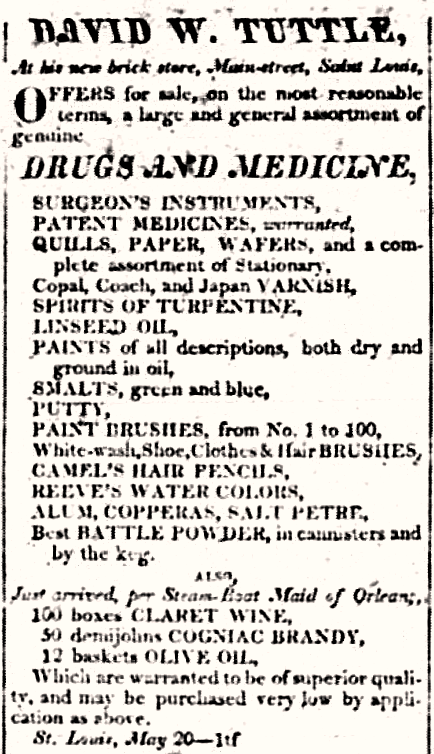
That didn’t last long.
As markets became more crowded and consumers were presented with more choices, copywriting as we know it today came to life. It became less about stating facts and more about understanding human psychology — how to capture attention, hold it, and persuade someone to choose one product over another. Memorability and differentiation suddenly mattered.
One of the early pioneers of this approach was John Emory Powers, often dubbed “the father of modern creative advertising.” He was known for his sometimes shockingly truthful, no-frills style. While working for the department store Wanamaker’s, he was once told they needed to clear out a surplus of what were described as “rotten gossamers.”
What did he do?
He famously wrote an ad that said: “We have a lot of rotten gossamers and things we want to get rid of.”
The story goes that by noon the day the ad ran, the entire stock had sold out.
Following Powers, copywriting eventually matured into a more strategic and disciplined craft. In the mid-twentieth century, iconic figures like David Ogilvy, Claude Hopkins, Eugene Schwartz, and John Caples helped formalize the profession, emphasizing research, clarity, and respect for the reader’s intelligence. Their approaches were connected by several shared themes: effective copy doesn’t rely on gimmicks or empty cleverness, but on understanding human motivation, articulating genuine value, and making it easy for people to say yes.
That foundation still underpins the best copywriting and advertising today, and that focus on respecting the reader has only become more essential over time. Today, copywriting has evolved from a tool for driving immediate sales into something more relational, used to foster lasting connections with increasingly discerning audiences.
What copywriting does today
Modern copywriting goes far beyond describing a product or service in a polished way or simply grabbing attention. At its best, it invites customers into a brand’s world and builds a relationship that lasts beyond a single transaction.
Strong copywriting does this by:
- Using language and content strategically to engage, educate, and guide audiences
- Speaking to real motivations and emotions, grounded in a deep understanding of the customer
- Clearly expressing a brand’s mission, values, and personality through a distinct, consistent voice

The true value of copywriting for your brand
With that context in mind, let’s take a closer look at the benefits of strong copywriting, practically speaking, for your brand.
Copywriting builds trust (the kind that fuels growth)
Language is the foundation of human relationships. The words you choose can make people feel understood, reassured, and confident or uncertain and disconnected.
Brand messaging defines what you say. Brand voice determines how it’s heard. Through thoughtful copywriting, you communicate your values, personality, and point of view in a way that feels consistent and credible — laying the groundwork for long-term trust, which as we mentioned earlier, is a non-negotiable these days.
Copywriting does the selling for you (so you can focus on the bigger picture)
Think of your website as your most reliable sales associate: always present, always clear, never pushy.
Strong copywriting anticipates questions, simplifies decision-making, and guides visitors toward action. When your narrative is clear and customer-focused, you spend less time convincing and more time doing the work only you can do.
Copywriting distinguishes you from the crowd (in the right way)
In the age of AI, it’s easy to spot inauthentic, slapped-together, or cookie-cutter copy. The copy that feels just a bit…flat or off.
When done right, copywriting should reek of your brand voice, highlighting its unique quirks and personal style. It adds texture in a world that has become deceptively smooth. This is how you will get your customers to connect with what you’re saying and come back for more.
Copywriting clarifies your position in the market (so people “get” you)
When your copy is doing its job, people immediately understand who you are, what you stand for, and whether you’re right for them.
Just think of Red Bull. What first comes to mind? Whether it’s a man skiing down Mt. Everest (I mean, did you see that!?) or an extreme kayaker carving his way through a glacier, their identity — rooted in adventure, fearlessness, and innovation — is undeniable.
Why? Because they’ve mastered the art of telling a consistent story, across every touchpoint, until their brand’s point of view is as clear as that glacier ice (sorry, couldn’t help ourselves with that one).
Are your words landing?
Okay, so now that we have established the role of copywriting today, let’s pause for a moment and reflect on the words you are using for your brand.
Use these questions to do a quick self-audit:
- Does your website clearly communicate your story?
- Do your words reflect a distinct point of view and set of values?
- Is your message easy to understand (and easy to remember)?
- Are you attracting the right customers and earning their long-term trust?
- Do your words inspire people to take action?
If you answered “no” or “I think so…?” to any of these questions, honing your copywriting can help you connect with your customers authentically and strategically.
Not sure where to begin? We’re only a click away from helping you share your story with clarity and intention.



.png)
Find your brand voice, attract your people
download the guide