

How to write an About page people actually read — and connect with
Let’s get this out of the way first: Writing an About page is hard.
You sit down to write about yourself, fully intending to sound warm, confident and “like you,” and suddenly everything becomes stiff. Or vague. Or painfully self-promotional. Or all three at once.
But here’s the thing — your About page isn’t really about you. It’s about the moment your story touches something inside your reader — the moment they think, “Oh, I get you. And I think we’d work well together.” When you write with that intention, your About page becomes one of the strongest pieces of brand storytelling for your creative business (and we find it takes some of the pressure off).
Why your About page matters
Before anyone works with you, two things happen:
- They try to figure out who you are.
- They try to decide whether you’re someone they can trust
This means readers arrive at your About page with a load of unspoken questions like:
● Who are you as a human, not just a founder or business?
● Why does this work matter to you?
● Do we share any values?
● Can I imagine emailing you, paying you, collaborating with you?
A strong About page answers these questions quietly and confidently. It’s not about recounting your life story or listing every accolade (impressive as they may be). Instead, it's about pulling readers into a concise, compelling story — one that shows how you or your business got from point A to point B and what drove you on that journey. Done right, this is what helps convert curious readers into your next clients.

So, what makes an About page compelling?
There’s no single formula, but look at the most effective About page examples across the internet, and you’ll spot the same elements again and again.
1. A narrative that flows
Rather than sharing the plot of your entire life, zoom in on the moments that shaped your creative perspective. Ask yourself:
● What experiences nudged you toward this work?
● What values guide you?
● What turning points influenced how you show up today?
2. A clear, grounded “why”
Skip the grand mission statements and definitely skip the corporate jargon. Try answering this instead:
Why does this work matter to you in real life, on a Tuesday morning, when nobody is watching?
That’s your why, and it’s what people will remember about you once they’ve finished reading. Helping readers feel emotionally aligned with you is key to fostering a connection with them, the kind of connection that can eventually lead to conversions.
3. A human snapshot
People want to know that you are competent, but they also want to know if you are a relatable human who will get what they are going through. That's why adding in a small personal detail or two can go a long way. It could be something about your office, your routine, or one of your creative quirks — we threw in a Bad Bunny reference on ours, so the sky's the limit here. The goal isn’t to spill your guts, but to reveal something that your target audience will be able to identify with and that will give them a sense of who you are beyond the job title.
4. A gentle, thoughtful call to action
The best About pages don’t close with “Work with me NOW!” energy, but instead with an invitation.
Ask yourself: what do I want people to do next? Invite the reader to do this without pressure, for example:
“Sounding like we’d align? Let’s talk more. Send me a message here 👉”
What to include on an About page (that most people forget)
Yes, the crucial part is your story and your “why”, but if you really want to make your About page pop, there are a few extra elements that will leave your readers feeling like, “Wow, these guys seem pretty cool.”
Social proof — but placed with intention
A stack of testimonials down at the bottom isn’t doing you any favors – your reader has already made their mind up about you by the time they get there. Instead, try sprinkling just one or two lines exactly where they reinforce your narrative.
For example, placing a client quote saying how great you are to work with right after describing your creative philosophy helps to prove that you aren't just all talk.
Imagery that reflects your brand personality
Whether we like it or not, we do judge a book by its cover, and we judge a brand by its visuals, so it’s important that your photos feel like your brand in aesthetic form — warm, clean, colorful, chaotic, minimalist —whatever your world feels like.
A sense of your values
While you don't have to list out your values explicitly, they should be implied through the way you describe your work so that your audience walks away with an understanding of the principles that guide you.
Think about the things you care about, the things that are non-negotiables. How do they show up when you work with clients? Paint a picture for readers. For example, if you’re a web designer who values accessibility, that might show up in small but intentional choices — like designing with clear contrast, readable fonts, and simple navigation, even when it means saying no to trends that look good but make a site harder to use.
A strong About page example — and why it works
Let’s look at Dopper’s About page. It’s a succinct, personality-packed example that weaves in a personal touch while consistently grounding the message in the audience and what’s in it for them.
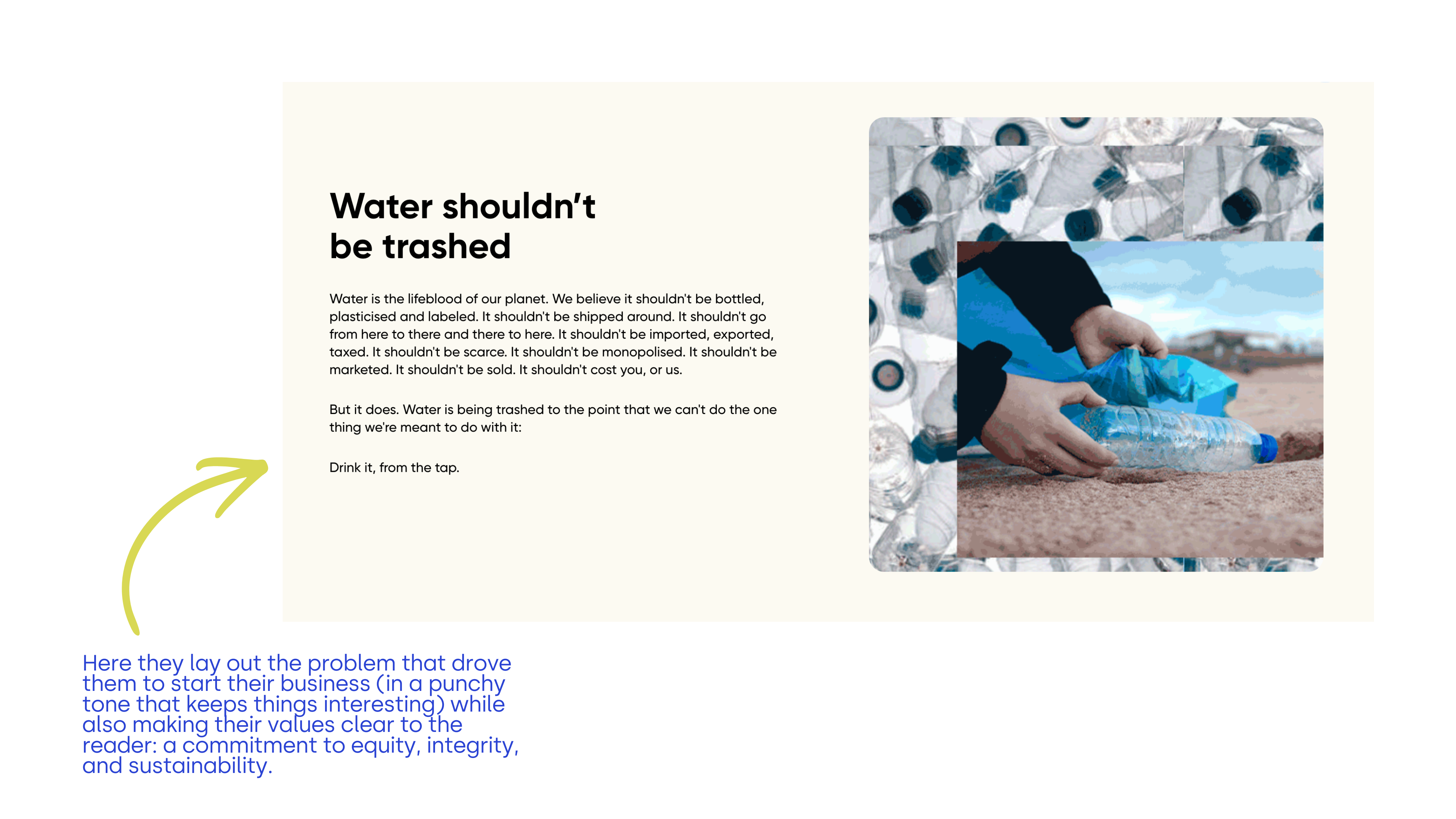
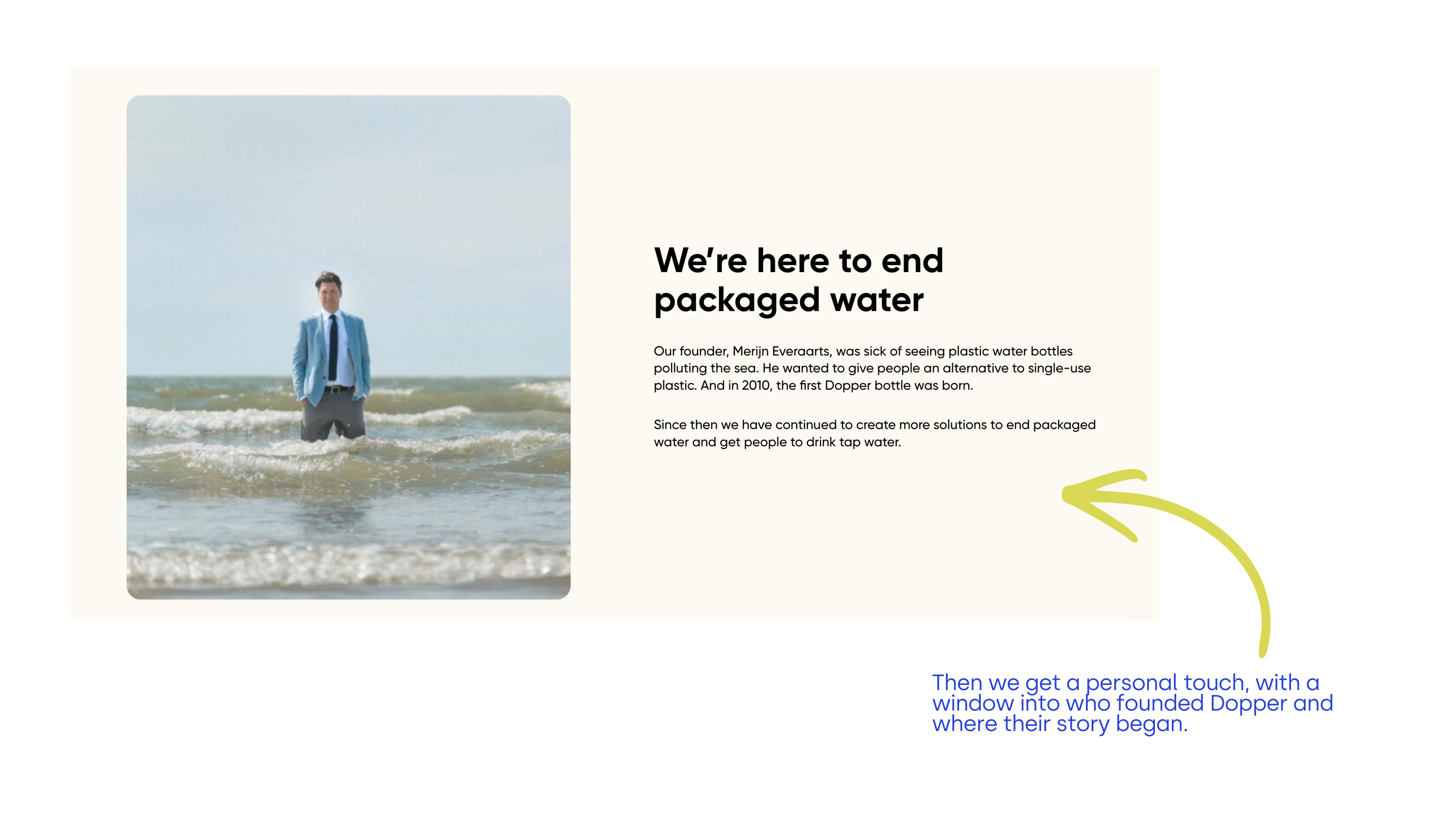
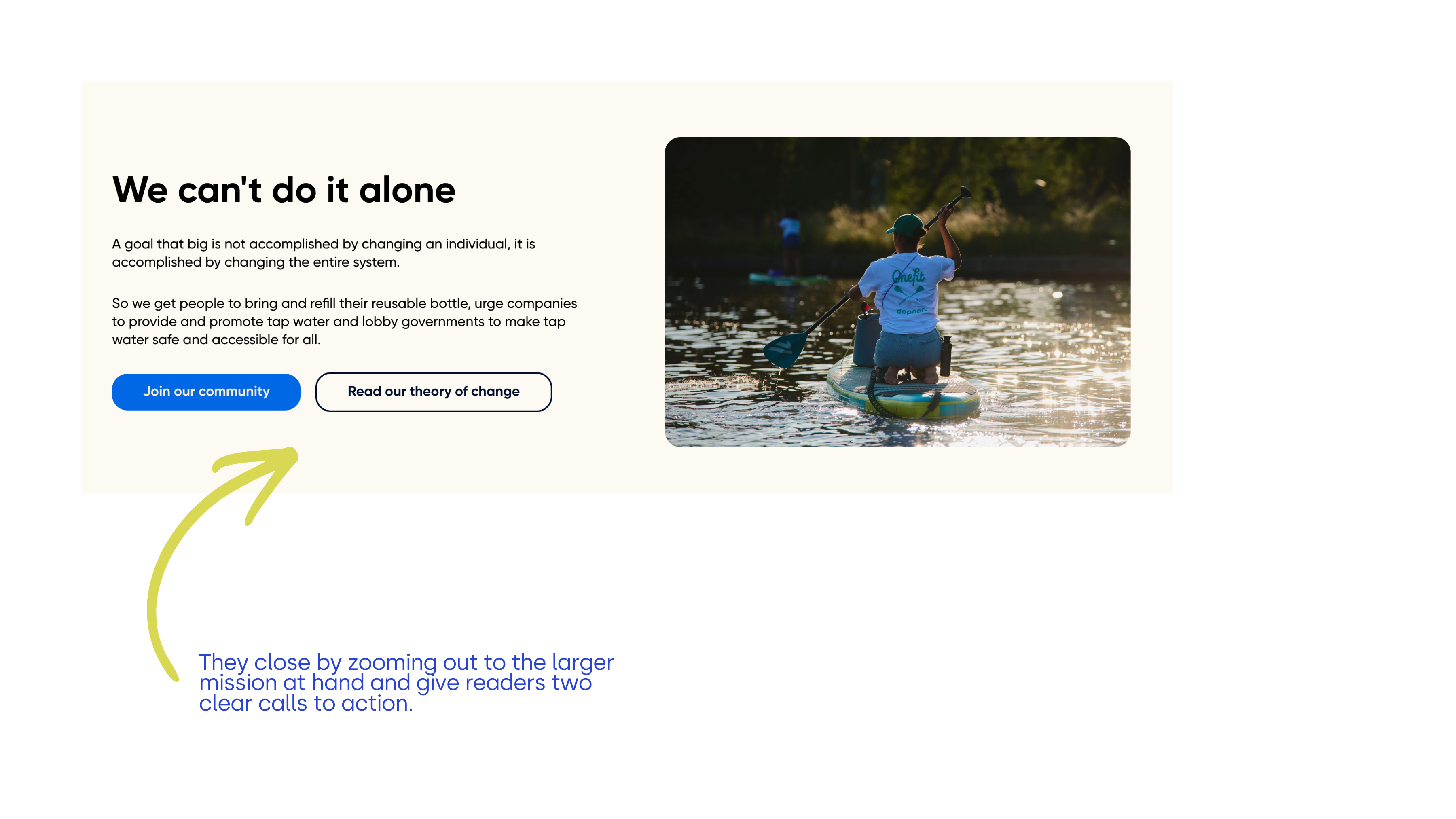
While Dopper focuses more on their mission and keeps the personal side short and sweet, we still walk away with a sense of who they are as a brand and an understanding of what moves them. Whether you’re a solo creative or a team of 200, no matter how you structure it, that should be your goal.
Need help crafting an About page that feels like you and builds connection with your ideal clients? We are always here to help.


.png)
Find your brand voice, attract your people
download the guide