

Most welcome emails are boring. Here’s how to fix yours.
There’s something deeply gratifying about watching someone willingly hand over their email address in 2026, because let’s be honest, people guard their inboxes with their lives nowadays — and understandably so. We ignore texts from our close friends for three to five business days, unsubscribe from newsletters after seeing one slightly annoying subject line, and delete approximately 47 promotional emails before we’ve even had our morning coffee.
So when someone subscribes to your mailing list, it’s actually kind of a big deal. And yet, so many brands completely fumble the follow-through. You sign up and immediately get a painfully dry confirmation email, a wall of corporate jargon, or worse yet, an aggressive sales pitch.
Why nailing the welcome sequence matters more than ever
The thing is, most businesses now understand the importance of building an email list and the importance of "owned channels" (aka: channels you have full control over) vs. being at the whims of the latest algorithm. But not enough people think intentionally about what happens immediately after someone joins, which is a huge missed opportunity, because those first few emails are where:
- first impressions are formed,
- trust starts building,
- your personality comes through,
- and readers decide whether they actually want to keep hearing from you.
In a world full of AI-generated content, endless scrolling, and people being sold to approximately every four seconds, making that early connection matters now more than ever. This is especially because people rarely buy immediately anymore. Instead, they lurk and they observe…while reading your emails horizontally in bed when they should be sleeping (I know I’m guilty of that 🙋). All the while they’re figuring out:
- Do I like this brand?
- Do I trust their perspective?
- Do I actually care about what they have to say?
Your welcome emails, or “nurture sequence”, are what help answer those questions — and you don’t have long to do it before it gets unceremoniously dumped in the virtual trash (sorry).
But if you can manage to hook their attention, it will be well worth it, because people actually do open welcome emails. Research shows that welcome email open rates are consistently higher — up to 40% higher in some cases — which makes sense. This is usually the moment someone is most interested in your brand.
So instead of treating your welcome email format like a quick bit of admin work, think of it as the beginning of a conversation, because that’s what a good email nurture sequence really is.
First things first: what is an email welcome sequence?
Now, I just blabbed a lot about welcome emails this and nurture sequences that, but let’s backtrack a bit and nail down exactly what we’re talking about.
So what is an email welcome sequence?
Here’s a tidy definition: A welcome or nurture sequence is an automated series of emails someone receives after joining your email list. Usually, it’s around 3–5 emails spread over a few days or a week.
They work in the background while you focus on running your business, drinking iced matcha, missing Slack notifications, or whatever else your days currently look like.
And no, this email sequence isn’t the same thing as your regular newsletter. Your newsletter is ongoing communication; your welcome series emails are the introduction.
They’re there to:
- Introduce your brand
- Build familiarity
- Nurture trust
- Communicate your values
- Gently guide readers toward the next step
What a welcome sequence ISN’T: A sales pitch where you push someone to buy your product or service five minutes after they have downloaded a PDF or so graciously parted ways with their sacred email address. (We need to collectively heal from the email marketing tactics of the 2010s.)
A strong welcome sequence helps move someone from: random subscriber → engaged reader → client.
The anatomy of a strong email welcome sequence
Now let’s get to the juicy bit: what you should actually include in your welcome emails. While there’s no single perfect welcome email format, the strongest welcome emails usually follow the same general rhythm:
- Welcome your new subscriber
- Deepen the connection
- Offer value and invite action
Email 1: Welcome + orientation
When to send it:
1–2 hours after someone subscribes
The purpose:
- Deliver the freebie/resource if you have one
- Introduce your brand
- Set expectations
- Make the reader feel like they’re in the right place
The thing to avoid here is the email feeling like an “automated workflow,” instead the aim should be to open the door and say, “Hey, glad you found us. Here’s a little about who we are.” This is the point where so many brands unintentionally become weirdly formal. You know the type: “Dear subscriber, your resource has been delivered successfully.”
Your subscribers aren’t looking for a corporate onboarding experience after downloading your guide on sustainable branding. They want reassurance, warmth, and personality — a sense that there’s an actual human being behind the business. And yes, this also applies to larger organizations that have a more formal voice. There’s always a way to work in your personality that feels true to your brand.
Even tiny tweaks here make a huge difference. Compare:
“Your download is attached.”
with:
“I made this because I kept seeing people struggle with the exact same thing, and honestly? It doesn’t need to be this complicated.”
Let’s take ES Content Creative’s own first welcome email as an example:
I open with enthusiasm and give subscribers a quick look at what they can expect from us:
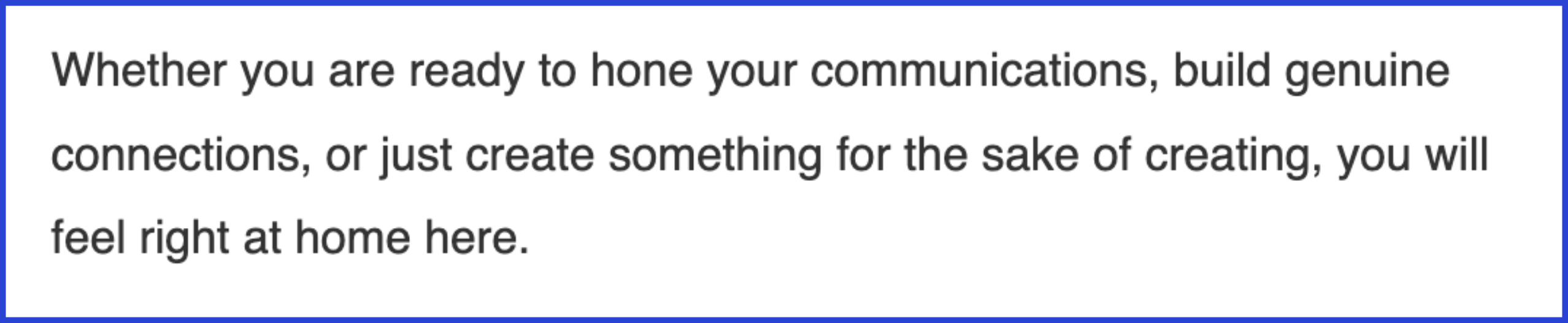
➡️ That line positions the newsletter as more than “marketing content.” And cues people into the fact that they are entering a creative space with a clear point of view and community behind it.
The email also introduces a bigger idea straight away:
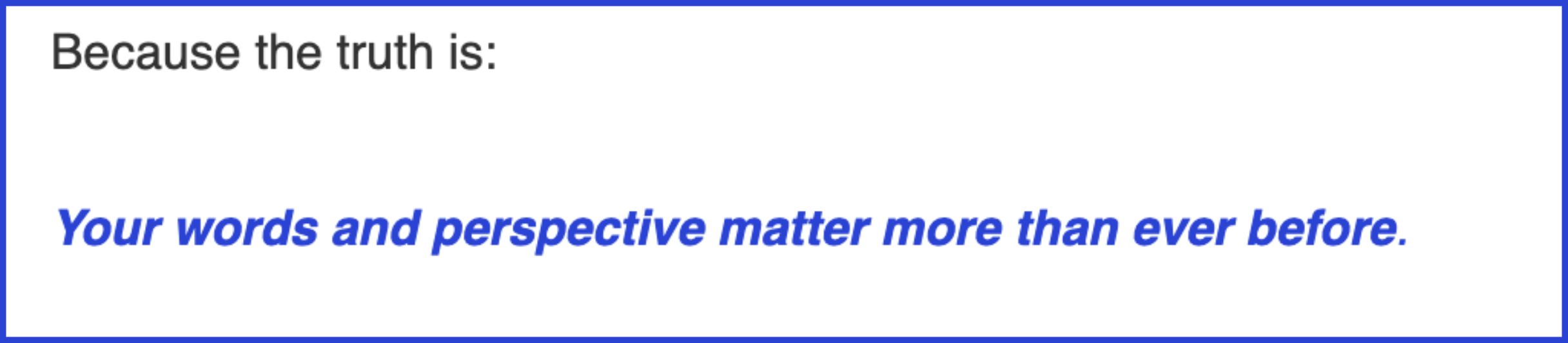
➡️ Now I am going beyond the what and straight to what we believe. Because the goal is to help people get a feel for who we are.
This is also the perfect place to tell people what happens next. For example:

➡️ A tiny detail, but a huge trust-builder. Now the subscriber knows what’s coming, the pacing feels intentional, and you pre-empt any concerns when they see another email from you so soon and start to worry that you might be about to spam their inbox.
Email 2: Your story and point of view
When to send it:
2–3 days later
The purpose:
- Share the deeper “why” behind your brand
- Introduce your values
- Help readers understand your perspective
- Build an emotional connection
This is usually the part where people overthink themselves into oblivion, because suddenly you’re hit with the task of trying to “tell your story” without sounding cringe, self-important, or like one of those LinkedIn posts that ends with “and that’s when I realized…”
Start by reminding yourself that while this email is where you can share more about your mission, it is NOT your resume or full life story. And it’s not even fully about you or your brand — it’s about a piece of your story that will connect with your readers.
What you are really giving here is context. What shaped your perspective? What frustrations led you here? What patterns do you keep noticing in your industry? Try starting with an insight or story that illuminates some of the answers to these questions.
That’s what I did for the second email in our sequence, telling the story of the one-way ticket to Europe that was the impetus for both my life abroad and ES Content Creative. I decided to lead with this personal story because it’s vivid and representative of the values ES Content Creative was founded upon.
.png)
➡️ You can picture the version of me sitting there making that decision, and, suddenly, the business philosophy makes much more sense because you understand the experiences behind it.
While most of this email will be spent talking about you and your brand, by the end you want to make sure that the story circles back to the reader and their place within it.
Here’s what that looked like for us:
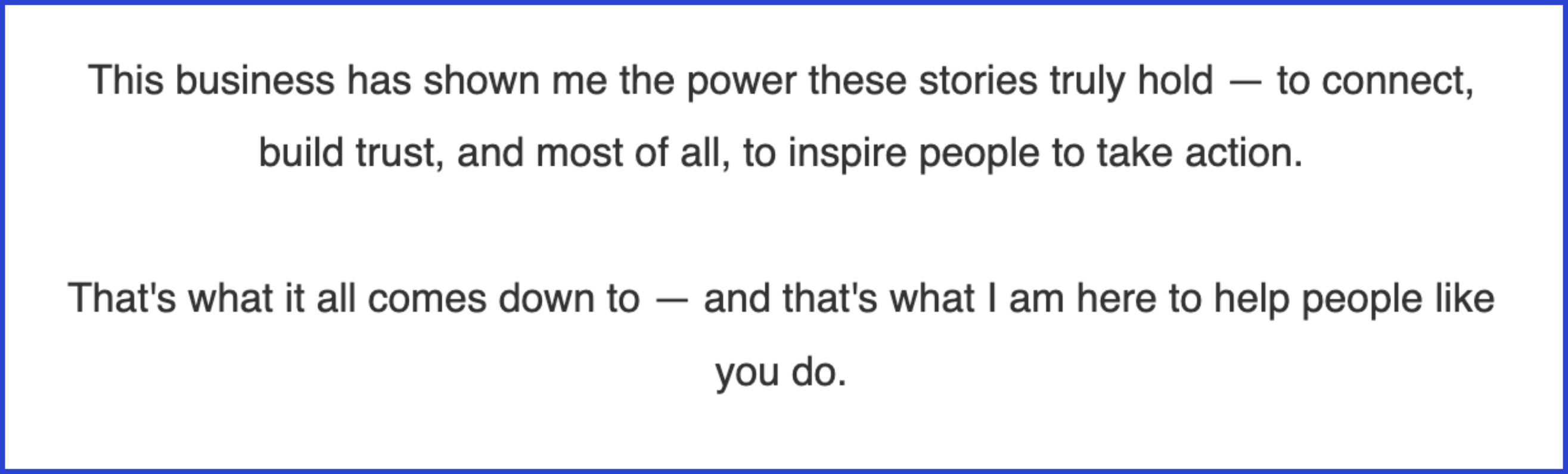
➡️ Because even though on the surface I’m talking about travel, blogging, and building my business, the deeper message is:
- Creativity matters
- Perspective matters
- Storytelling builds connection
- Brands don’t need to sound robotic to be taken seriously
By the end of the email, you don’t just know what the business does, you understand how they think. This emotional alignment is what actually builds trust.
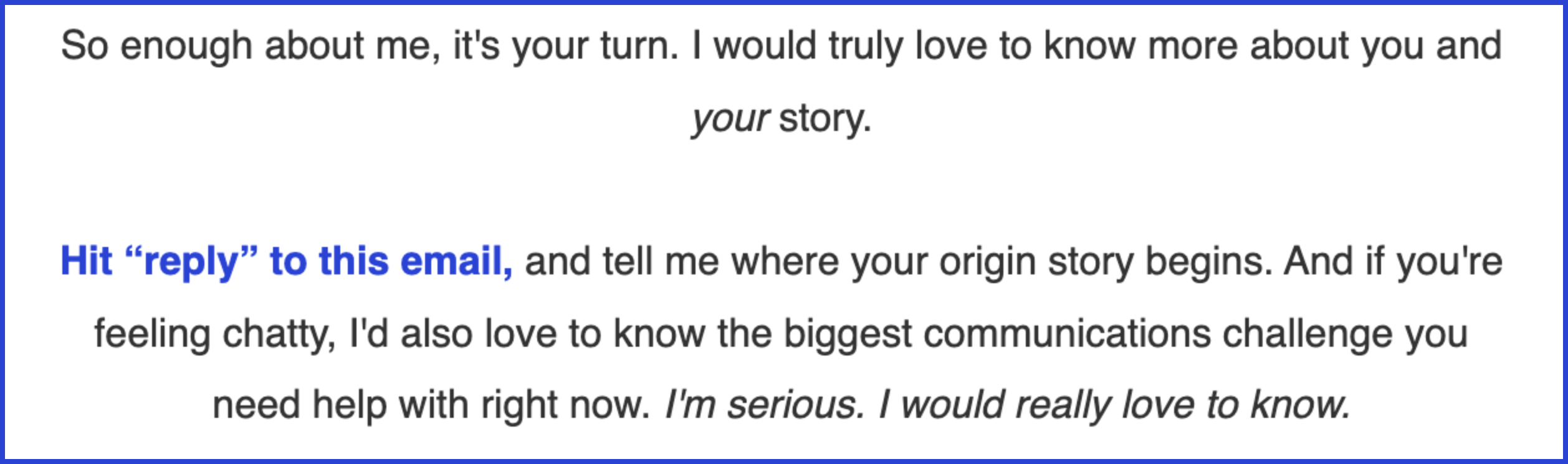
Consider closing the email with an invitation to your subscriber, so that it goes from monologue to a conversation:
Email 3: Value + invitation
When to send it:
2–3 days after the second email
The purpose:
- Share something genuinely useful
- Introduce your offer naturally
- Encourage action without sounding pushy
Now, we’ve finally reached the moment where you can and should start talking explicitly about your offer — because at the end of the day you are a business with things to sell. However, this is where a lot of brands suddenly shapeshift into late-night infomercials. Please, whatever you do, resist the urge.
Because, yes, your welcome series emails should support your business goals – that's kinda the whole reason we're here (see “business with things to sell”) – but there’s a huge difference between guiding someone toward an offer and spiritually jump-scaring them with an aggressive sales pitch.
So, what’s a good approach?
Start by offering value that demonstrates exactly why you are so good at what you do. That could look like:
- A framework
- A useful insight
- A client story
- A common misconception
- A behind-the-scenes process
- A perspective shift
And then follow up with an invitation to take action. Because while many buyers will take a while to pull the trigger, you will have some who are ready to move right away, and you need to let them know what you have in store for them!
For ES Content Creative’s third welcome email, we decided to showcase our value through an anecdote that reveals a deeper truth about our process. The email opens with a story about how I wrote for a street style blog in college which resulted in me chasing stylish strangers across my campus for interviews:

➡️ But I’m not just offering random nostalgia. The story is actually a metaphor for ES Content Creative’s philosophy around storytelling, individuality, and uncovering what makes people distinct.
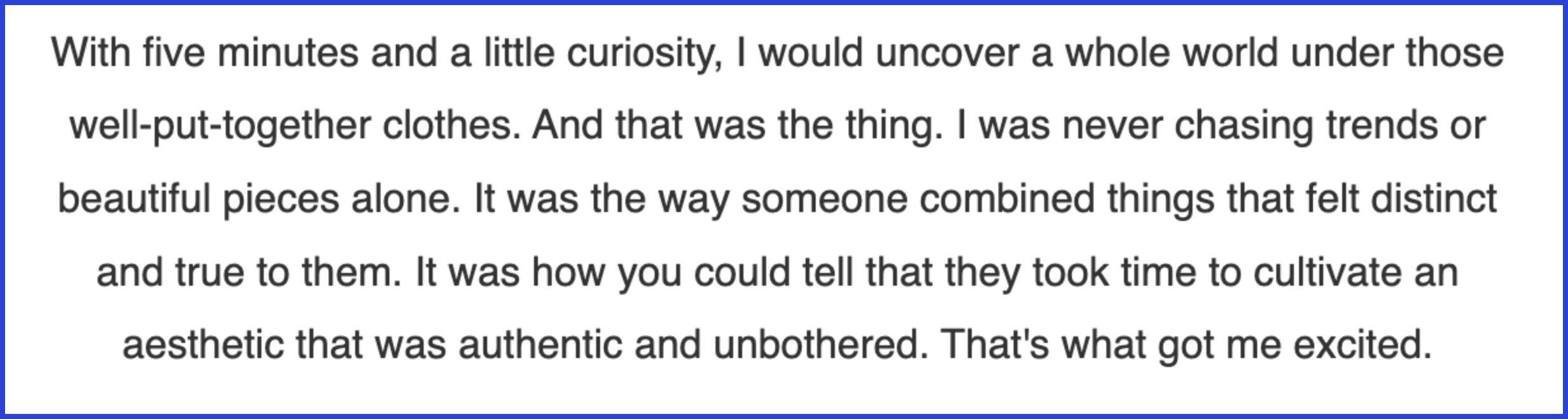
➡️ Without explicitly saying “We value authenticity,” the email communicates exactly that. By the time the services are introduced later on:
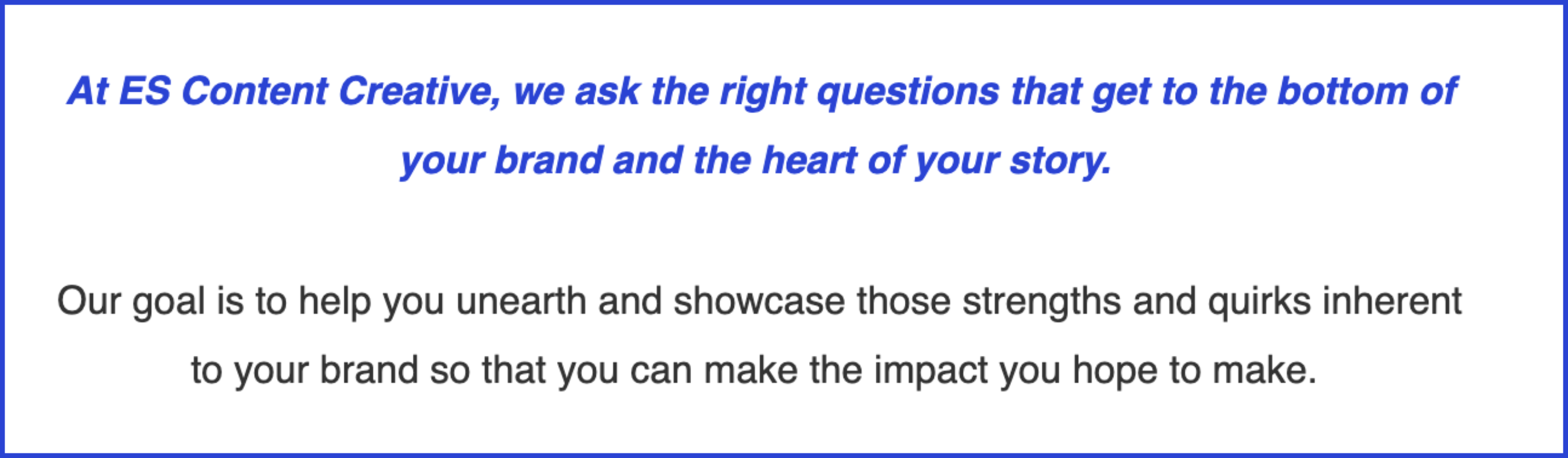
…the sale (hopefully) feels more natural because a connection has been laid and some level of trust has been built.
That’s the thing most people get wrong about welcome emails. The goal isn’t to force urgency, but to create enough resonance that when someone is ready to work with you, you’re already the obvious choice.
Final thoughts
I just threw a lot of info at you, but if there's one takeaway here, it's to step outside the notion that a welcome sequence’s only purpose is to “convert leads.” Instead, take a more all-encompassing approach — the goal is also to establish familiarity, gain trust, build momentum, and form a connection. And in 2026, the value of these things cannot be overstated.
So if your current welcome email format is: “Here’s your freebie :)” followed by six months of silence…this is your sign to revisit it.
And if you want help creating welcome emails that sound like you — rather than an automated template — you know where to find us.
P.S. If you want to see our ENTIRE welcome sequence and read all three emails from start to finish, make sure you sign up for our email list.



.png)
Find your brand voice, attract your people
download the guide