

7 psychological triggers that make your copy more persuasive (and more likely to convert)
Have you ever landed on someone's website — just to take a little peek at what they're doing — only to get completely sucked in? Before you know it, you're signing up for their freebie or hovering dangerously close to buying another course you didn't even know you needed.
(...or is that just me?)
But have you ever stopped to unpack what actually happened there? What made you go from casually browsing to seriously considering handing over your hard-earned cash?
While there's no one magic formula that can make people buy, the best brands and marketers understand something fundamental about human behavior: Our buying decisions aren't always as rational as we'd like to think. From the opinions of complete strangers to the fear of missing out on something good, countless psychological and emotional triggers influence us, often without us even realizing it.
And understanding these triggers can help make your copy a whole lot more persuasive.
But with great power comes great responsibility.
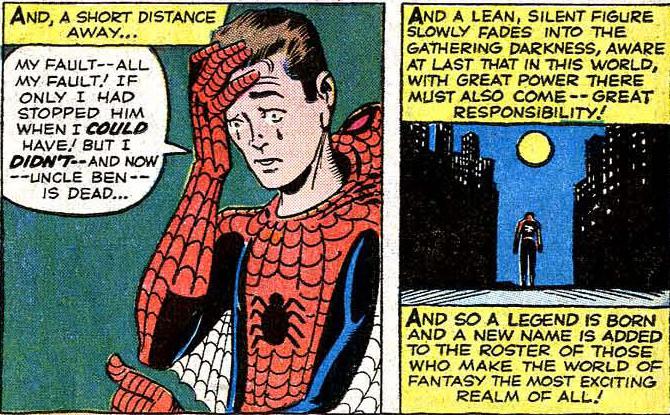
The goal should never be to manipulate people into buying something they don't need. It's to better understand your audience, communicate the value you're bringing, and help people recognize when your brand is the right choice for them.
I don't know about you, but AP Psychology was one of my favorite classes in high school. So, let's nerd out on the research behind seven psychological principles that can take your copy from "sounds nice" to "okay, I need that."
1. Social proof: People trust people more than promises
Humans are social animals. We're constantly looking to others for cues about how to behave, what to believe, and which decisions to make. This is the idea behind social proof: When we're uncertain about something, we often look to the experiences and decisions of others to help us figure out what to do.
And while this tendency has deep roots in our evolution and survival as a social species, today it also influences the arguably much more inconsequential things, from where we eat dinner to which brands we trust.
I mean, I know I’m not the only one who pours over Google Maps reviews before picking a restaurant…
The research:
In a 2020 study published in Electronic Markets, researchers investigated how social proof influenced people's willingness to adopt digital identity verification, or eID, for online government services. In a controlled experiment involving 161 participants, they tested whether changing the default option and displaying information about other users' choices would encourage people to select the digital service.
They found that participants exposed to social proof were 3.96 times more likely to adopt eID as those who weren't exposed to it and that it also helped ease some of the privacy concerns associated with making digital identification the default option.
In other words, seeing that others had already made a particular choice helped make an unfamiliar service more appealing.
How to apply it to your copy:
I’m sure it won’t be breaking news to you that testimonials are important, but if yours are buried on a forgotten page of your website, consider this your gentle reminder that you're missing an opportunity. Make sure you are putting them where people are actually making decisions: alongside your offers, near your calls to action, or on your product and service pages.
And don't just settle for generic praise like, "Great to work with!" Look for testimonials that address specific concerns, explain the transformation your client experienced, or describe what made working with you different. Bonus points if you also use their words to shape your copy (an underrated method for ensuring your message resonates, if I do say so myself).
Beyond testimonials, customer stories, case studies, and measurable results are other examples of social proof that can all help potential customers picture themselves having a similarly positive experience.
The bottom line is that you should be letting your happy customers do some of the selling for you.

2. Reciprocity: Good things flow both ways
From "what goes around comes around" to "you reap what you sow" to "treat others how you want to be treated," the idea of reciprocity is deeply ingrained in the human experience.
When someone does something nice for us, we often feel inclined to return the favor. That's the principle of reciprocity: We tend to respond to generosity, favors, and concessions with something in return. And in marketing, it helps explain why giving something valuable before asking for a sale can be such a powerful way to build trust.
The research:
In a classic 1975 study, psychologist Robert Cialdini and his colleagues explored a particular form of reciprocity known as the door-in-the-face technique.
Researchers approached people with a large request, which most were unwilling to accept, before following up with a much smaller one. Across three experiments involving 202 participants, people were more likely to agree to the smaller request after first rejecting the larger one than when they were only presented with the smaller request.
The researchers suggested that when someone appears to make a concession, we can feel inclined to reciprocate by making one ourselves. While this experiment focused on reciprocal concessions, rather than giving away free resources, but both tap into the broader social expectation that generosity and accommodation should go both ways.
How to apply it to your copy:
Before you ask someone to buy from you, ask yourself: what can I give away that would be genuinely useful to them and a reflection of my expertise.
That could be a newsletter, a free guide, an educational blog post (ahem), or a practical tool that helps your audience solve a small problem. The key word here is genuinely. Nobody wants to download a 20-page PDF that turns out to be 19 pages of thinly disguised sales pitches.
When your content helps someone make progress, answer a question, or see something in a new light, you're building goodwill and demonstrating the value of your skills. And when they're ready to invest in more support, you'll hopefully be one of the first brands that comes to mind.
3. Information gap: Curiosity might be killing cats, but it’s getting clicks
You've reached the end of an episode. The hero is finally about to defeat the villain, save the day, and ride off into the sunset. But then! His sword slips. The villain gains the upper hand. The screen goes black.
And now you have to wait until the next episode to find out what happens.
Except, of course, the next episode is right there, so you let the autoplay roll, because what’s one more hour past your bedtime? You simply have to know how it ends.
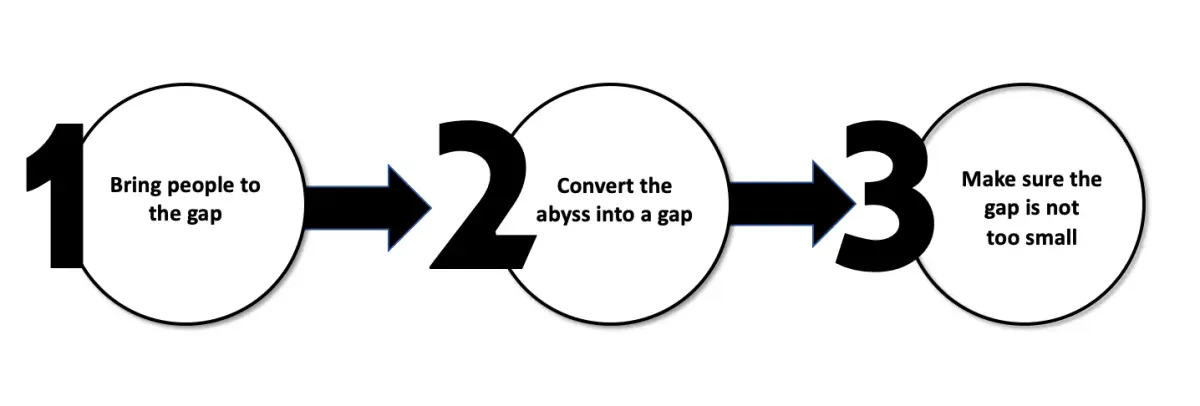
This is the information gap theory at work.
When we recognize a gap between what we know and what we want to know, our brains become motivated to close it. That unresolved tension is what makes cliffhangers, intriguing questions, and clever headlines so hard to resist.
The research:
Psychologist George Loewenstein introduced his information-gap theory of curiosity in 1994, arguing that curiosity emerges when we become aware of a gap in our knowledge. Interestingly, we generally need to know something about a subject before we become curious about what we're missing. Too little information and we don't care. Too much and there's nothing left to discover.
Neuroscientists are still working to understand exactly how curiosity operates in the brain, but research suggests that reward-related processes, including dopamine signaling, play a role.
In a 2009 study, researchers led by Min Jeong Kang used trivia questions to investigate the relationship between curiosity, reward, and memory. They found that higher curiosity was associated with activity in brain regions linked to anticipated rewards. Curious participants were also more willing to spend limited resources or wait to discover the answers. Perhaps most interestingly, greater curiosity was associated with better recall of surprising answers one to two weeks later.
How to apply it to your copy:
Your headlines are the obvious place to start. Instead of "Five Ways to Improve Your Website," try something like "Is Your Website Making This Expensive Mistake?"
The second headline creates an unanswered question that readers may feel compelled to investigate. You can also create information gaps through email subject lines, social media hooks, and customer stories (e.g.: The one small change that helped our client double their conversions). Give your audience just enough information to pique their interest, without giving away the whole story.
But remember: There's a fine line between sparking curiosity and writing clickbait. If you promise something intriguing, you'd better deliver.
4. Authority: Don't just claim expertise — prove it
Our brains are constantly looking for shortcuts to make decisions. Psychologists call these mental shortcuts heuristics. And one of those shortcuts involves paying closer attention to information that comes from someone we perceive as an authority.
It makes sense. We can't become experts in everything, so we rely on people with relevant knowledge, experience, and qualifications to help us make informed decisions (and I’m not talking about “Instagram experts” here…).
The research:
In one study, researchers randomly assigned 459 young adults to see Instagram educational messages attributed to either a health expert, a friend, or an influencer.
Messages attributed to experts received significantly higher ratings for source credibility and message trust than those attributed to friends or influencers.
The study suggests that perceived expertise can make a meaningful difference to how people receive and evaluate information.
How to apply it to your copy:
If you've got expertise, don't be shy about sharing it.
Rather than filling your website with vague claims like "We're industry leaders" or "We deliver exceptional results," show people why they should believe you.
Think: relevant qualifications, years of experience, professional recognition, published research, or results you've achieved for clients.
And — this part is key — be specific.
"We've helped 57 independent brands clarify their messaging" is far more meaningful than "We've helped dozens of businesses succeed."
Another thing: Don’t automatically discount expertise that you think isn’t directly relevant to your field. Because there is still value in your finance degree, even if you are now running an influencer agency, I promise you — it all lies in the framing.

5. Loss aversion: What we stand to lose matters more than what we stand to gain
Imagine waking up to discover you've gained 100 new Substack followers overnight.
A nice little boost of dopamine, right?
Now imagine waking up to discover you've lost 100 followers.
Chances are, the second scenario would bother you a hell of a lot more than the first one would delight you.
That's loss aversion: Our tendency to experience losses more intensely than equivalent gains. Our survival-geared brain at it once again, trying to protect us from potential threats. While the strength of this effect varies depending on the circumstances, it can have a significant influence on how we evaluate choices and weigh up potential risks.
The research:
Psychologists Daniel Kahneman and Amos Tversky helped establish the concept of loss aversion through their groundbreaking 1979 paper on Prospect Theory. Their research challenged the traditional economic assumption that people make decisions by rationally calculating the expected value of different outcomes.
Instead, they demonstrated that our preferences can change depending on whether we perceive an outcome as a potential gain or loss. In their model, losses generally carry greater psychological weight than equivalent gains.
This helps explain why we might cling to something we already own, avoid a potentially beneficial change, or place greater importance on protecting what we have than acquiring something new — humans, in general, are risk-averse.
How to apply it to your copy:
Most businesses are pretty good at talking about what customers stand to gain from their products or services — those juicy benefits.
But what about what they're currently losing?
If you're selling a productivity tool, for example, you might talk about the hours customers are losing to repetitive admin tasks. If you're a sustainable fashion brand, you could highlight how cheaply made clothing often needs replacing sooner, potentially costing customers more over time. And if you're a copywriter, you might help potential clients recognize the opportunities they're missing when unclear messaging leaves visitors confused about what they actually offer, and thus, is costing them sales.
The trick is to highlight the genuine cost of inaction, not manufacture fear or create a false sense of urgency, because making people anxious isn't the same thing as making a compelling case for your offer.

6. Bandwagon effect: Sometimes, popularity creates its own momentum
Have you ever picked up a New York Times bestseller, made it halfway through, and thought, "What the heck is everyone raving about?"
Welcome to the bandwagon effect.
This cognitive bias describes our tendency to adopt certain behaviors, opinions, or preferences because they're popular with other people.
It's closely related to social proof, but there's a subtle difference. While social proof helps us decide what to trust when we're uncertain, the bandwagon effect describes how popularity is its own reason. Something becomes desirable partly because everyone else seems to want it. Just ask yourself: would you rather go to the restaurant with no one in it, or the one with a line around the block.
The research:
In a fascinating 2006 study published in Science, researchers Matthew Salganik, Peter Dodds, and Duncan Watts created an artificial online music market involving 14,341 participants.
Participants listened to songs by unfamiliar artists and could choose which ones to download.
Some made their decisions independently. Others could see how many times each song had already been downloaded. The researchers found that when participants could see what others were choosing, musical success became both more unequal and less predictable.
In other words, popularity wasn't simply a reflection of quality. The choices of previous listeners helped shape which songs became successful.
How to apply it to your copy:
If your brand has genuine momentum behind it, make that visible. Maybe you've built a thriving community, sold out a popular workshop, or helped hundreds of customers achieve a particular result.
These are all things worth sharing in your messaging.
For example, instead of simply saying "Sign up for our newsletter," you might say "Join 2,000 creative founders getting our weekly insights" — or whatever the number may be.
You can also spotlight bestsellers, popular services, or products that customers keep coming back for.
7. Cognitive fluency: Confused people don't buy
Are you noticing a trend here? Our brains love shortcuts. And when it comes to processing information, we're drawn to things that are easy to understand.
That's the idea behind cognitive fluency, or the ease with which our brains process information. Simple language, familiar terms, and clear messaging can make information easier to absorb. Jargon, complicated explanations, and dense blocks of text, on the other hand, make our brains work harder.
And when something feels difficult to understand, we may assume it's difficult to do, too.
The research:
In a 2019 study published in Public Understanding of Science, researchers investigated how the use of jargon influenced people's responses to information about emerging scientific technologies.
In an experiment involving 650 participants, they found that jargon made information more difficult to process, which in turn increased people's resistance to persuasion, perceptions of risk, and opposition to adopting the technology.
TLDR? Complicated language didn't make the information seem more impressive or credible. It actually made people less receptive to the message.
A good reminder that when it comes to persuasive communication, clarity always beats cleverness.
How to apply it to your copy:
If you want people to buy, make it as easy as possible for them to understand what you're offering and why it matters.
That means:
— Ditch the jargon.
— Break up long paragraphs.
— Use clear headlines that guide readers through your message.
— And this one is my personal fav: explain the benefits of your product or service in language your audience actually uses, not the language your team uses in meetings.
For example, instead of saying your software "leverages an integrated workflow optimization solution," explain that it "brings your projects, deadlines, and team conversations into one place."
Which one would you rather read?
Good copy understands human psychology — it doesn’t exploit it
If there's one thing I want you to take away from all this research, it's that persuasive copywriting is about much more than rationally explaining who you are and what you do.
It starts with understanding the people you're writing for and the emotional triggers and motivators that drive them. What do they care about? What's holding them back? What would make them feel more confident about taking the next step?
These psychological principles are tools that can help you get the most out of those answers, and when you combine that understanding with a genuinely valuable offer and a distinctive brand voice, that's when the magic happens.
If you need a little support in figuring out how to leverage these triggers, ES Content Creative is here to help. We bring audience insights, creative thinking, and strategy-backed copywriting together to help you find the right words that move your brand and mission forward.
Want to learn more? Tell us about your project here.


Find your brand voice, attract your people
download the guide